A page can rank for a relevant keyword and still disappoint visitors if it does not give them what they came to find. Search intent optimization closes that gap by matching each page’s format, depth, and next step to the searcher’s goal. The result is a more useful experience and a stronger fit between queries and content.
This guide explains how to recognize the four keyword intent types, map them to existing or planned URLs, and improve pages with practical examples. You will also learn how to measure whether a page satisfies a need instead of judging success by rankings alone.
Build a Search Intent Optimization Map Before Editing Pages
Start with the search results, not assumptions about what a keyword means. A phrase can sound informational while the results reveal product pages, or sound transactional while searchers are mostly comparing providers. Search intent optimization begins by checking what Google currently considers a useful answer for the query and the audience you want to reach.
Choose a representative set of queries from your keyword research. For each one, record the current top results, dominant page type, visible SERP features, likely audience, and action the searcher may take next. A spreadsheet is often enough: add columns for query, intent, ranking URL, result format, content gap, and recommended action. For larger sites, use a crawler export and Search Console data to connect queries with landing pages.
Classify the goal behind each query into four broad categories:
- Informational: The searcher wants an explanation, answer, or instructions.
- Navigational: The searcher is trying to reach a particular brand, product, or website destination.
- Commercial investigation: The searcher is comparing options before choosing.
- Transactional: The searcher is ready to buy, sign up, download, or complete another action.
These categories are a working model, not rigid boxes. A query such as best accounting software for freelancers may signal commercial investigation, while accounting software pricing may sit closer to a purchase decision. Record the dominant intent and any secondary intent rather than forcing a false certainty. That nuance helps teams decide whether one page can meet the need or whether separate pages are appropriate.
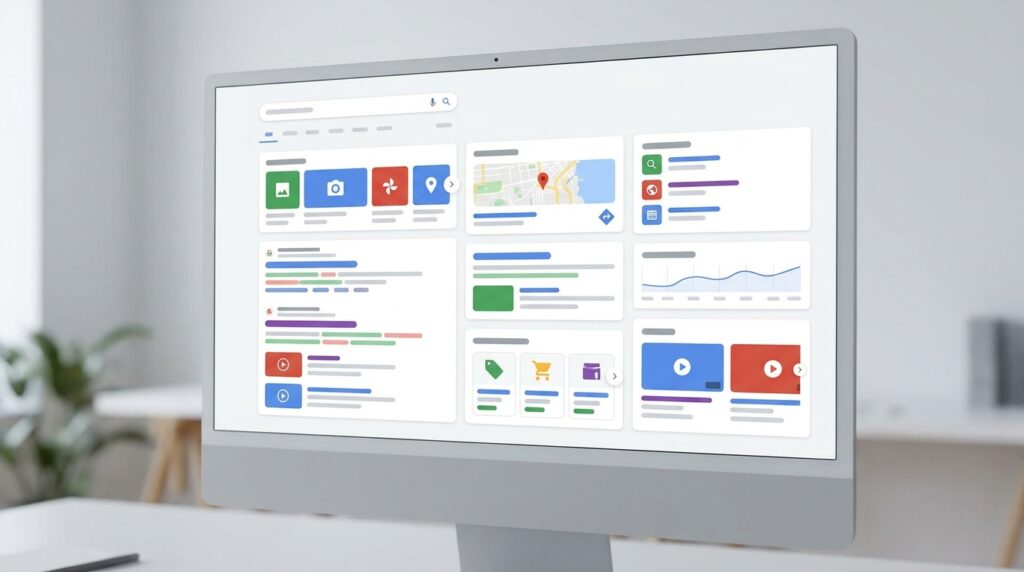
Inspect the first page of results for patterns. If most results are how-to guides, a short definition page is unlikely to compete. If results show category pages with filters, a blog post may not be the right destination. Note image packs, video results, local listings, featured snippets, and other features that change how users engage with the SERP. The SERP features optimization guide can help you account for those result formats.
Then map one primary URL to each cluster of closely related queries. Avoid assigning the same target query to multiple pages unless each serves a genuinely different need. When two URLs compete, compare their intent, links, and performance; consolidate or clarify them instead of adding more near-duplicate content. A useful map turns search intent optimization into a concrete editorial and technical plan.
Use evidence, not a single clue
Word modifiers such as how, best, price, and login offer clues, but they are not proof. Combine language patterns with result formats, SERP features, and your own analytics. For a deeper planning process, adapt the SEO content brief template to capture the target intent, reader questions, and page requirements before drafting.
Serve Informational Intent With Complete, Easy-to-Use Answers
Informational searches are driven by a question or a desire to understand a topic. Queries may begin with what, why, how, or when, but they can also be short phrases such as crawl errors or meal planning. The page should help readers make progress without requiring them to decode jargon or visit several competing sources for basic context.
Choose a format that fits the task. A definition may need a concise explanation and examples; a process may need numbered steps; a complex subject may need a guide with diagrams, decision points, and troubleshooting. Search intent optimization for an informational page is not a matter of making every article longer. It is about providing enough detail to answer the real question accurately and efficiently.
Use the SERP to identify the expected level of detail. Look for common headings and questions across strong results, then assess which are essential and which are repetitive. Google’s guidance on creating helpful, reliable, people-first content is a useful standard: write for the reader’s task, demonstrate first-hand knowledge where possible, and make the purpose of the page clear.
Organize the answer so readers can scan and act. Open with a direct response, then explain the reasoning, steps, examples, and limitations. Use descriptive subheadings, short paragraphs, and lists where they improve comprehension. If the topic involves risk or professional judgment, state when the reader should seek qualified advice rather than implying that a generic article covers every situation.
For example, a search for how to reduce image file size calls for practical instructions, not a sales page for an image service. Explain the available methods, show what changes image quality, and include a simple workflow for choosing dimensions and formats. A relevant tool may be mentioned, but the page should not hide the answer behind a signup wall if the query indicates the user first needs to learn.
Use Search Console to review queries bringing impressions to the page. If the page appears for questions it does not answer, add useful sections or create a separate resource when the need is distinct. Review engagement metrics as supporting evidence: a high exit rate is not automatically a failure if visitors find a quick answer, while long time on page does not prove satisfaction if users are confused. Compare the page’s promise in the title and description with what the content actually delivers.
Make the next step helpful, not intrusive
Informational pages can guide readers to a related checklist, calculator, or deeper guide, but the next step should follow naturally from the answer. A prominent product pitch before the explanation can undermine trust and weaken the page’s fit. Add a contextual call to action only when it helps the reader continue the task.
Match Navigational Searches to the Destination People Expect
Navigational intent means a searcher is looking for a specific website, organization, product, or page. Queries may include a brand name, a service name, or a destination such as a company’s support portal. These searches often have an obvious target, so the priority is to make that destination easy to identify and reach.
Check whether your brand and key destination pages appear for branded searches. Search Console can show the queries associated with your site, impressions, clicks, and average position. Review the actual result snippet as well: an unclear title, outdated description, or irrelevant sitelink can create doubt even when the correct page ranks well. Search intent optimization here is about reducing friction and confirming that the user has arrived in the right place.
Give every important destination a distinct, descriptive title and a clear heading. A page called Support Center is more useful than a generic page called Resources when the visitor is seeking help. Use consistent brand naming and keep page information current. If users search for a login page, do not make them navigate through a long promotional homepage to locate it; provide an obvious route while following appropriate security practices.
For a business with multiple locations, products, or regional sites, make destination choices understandable. Use clear location labels, working internal links, and accurate contact information. Do not create a set of nearly identical pages merely to capture variations of a branded query. Each page should offer a distinct destination or practical purpose, and the site architecture should make those relationships easy to follow.
Brand searches can also reveal gaps in the user journey. Queries containing terms such as returns, warranty, pricing, or customer service may indicate that people cannot find essential information. If a product page ranks for a support need, improve navigation or create a dedicated support destination. For international audiences, ensure that regional visitors can reach the relevant version without being redirected in a way that blocks their preferred choice. The regional hreflang guidance covers ways to signal language and regional alternatives.
Do not assume that every branded search is navigational. A person searching for a brand versus another brand, or a brand review, may be comparing options. Inspect the results and the wording before assigning a category. Keep a record of these mixed cases in your intent map, and decide whether the branded page, comparison content, or a dedicated help page best serves the query.
Protect the destination experience
Check broken links, redirect chains, mobile usability, and indexability on high-value destination pages. A correct page that loads slowly or sends visitors through unnecessary steps still fails the underlying need. Test important journeys on mobile as well as desktop, and make sure navigation labels match the words customers use.
Win Commercial Investigation With Useful Comparisons
Commercial investigation describes searches made while a person is evaluating possible solutions. Queries often include best, top, review, versus, alternatives, or comparison, but the SERP remains the best evidence. Commercial intent keywords can indicate that a searcher is moving toward a decision, yet they do not always mean the person is ready to buy immediately.
Choose a format that helps someone compare options fairly. Depending on the query, that might be a comparison page, product category, expert review, shortlist, or alternatives guide. Explain the criteria behind the comparison, identify who each option suits, and disclose relevant limitations. Search intent optimization for this stage means helping the reader decide—not simply placing more products on a page.
For example, a page targeting project management software for agencies should define the evaluation criteria before listing tools. Discuss collaboration, reporting, permissions, integrations, and onboarding needs if they matter to the audience. Separate verified capabilities from opinion, and link to primary documentation when a feature claim needs evidence. If details can change, include a review process so the comparison does not become misleading over time.
Commercial intent keywords should be clustered by the decision they support. A query for best email marketing tools may deserve a broad shortlist, while Mailer A versus Mailer B calls for a focused comparison. Do not force both needs into a single page if the result formats and expected depth differ. At the same time, avoid creating a new URL for every minor wording variation; that can fragment links and make updates harder.
Use the SERP to see how competitors frame the decision, then improve on the usefulness rather than copying their headings. Look for unanswered questions in reviews, customer interviews, sales calls, and support tickets. A comparison page becomes more valuable when it addresses switching effort, compatibility, limitations, and the kinds of users who should choose a different option. Include transparent criteria and avoid presenting paid placement as an objective ranking.
Measure both organic visibility and meaningful progression. Track clicks to detailed product pages, use of comparison tools, qualified leads, or assisted conversions, depending on the business model. A page can support a sale without receiving the final conversion credit, so evaluate assisted paths alongside last-click reports. If rankings improve but qualified engagement drops, review whether the title overpromises or the content attracts a different audience than the page can serve.
Make commercial pages credible
State when information was checked only if your team can keep that claim accurate; never invent a review date. Label sponsored relationships clearly, separate editorial assessment from advertising, and make the methodology easy to find. Strong commercial pages earn trust by explaining trade-offs rather than pretending one choice is best for everyone.
Apply Search Intent Optimization to Transaction-Ready Pages
Transactional intent signals a desire to complete an action. That action may be a purchase, booking, subscription, account creation, download, or quote request. Query modifiers such as buy, order, sign up, book, and pricing can point toward this intent, but context matters: someone searching for a pricing model may still be comparing plans rather than ready to check out.
Make the relevant action obvious and make the page support it. A product page should present the product’s purpose, key benefits, important specifications, availability where applicable, and a clear purchase route. A booking page should show the service, location or delivery conditions, available options, and the next step. Search intent optimization at this stage removes avoidable uncertainty without hiding information that could affect the decision.
Review each step from landing page to completion. Test the primary call to action, forms, cart or booking flow, mobile layout, error messages, and confirmation state. A form that asks for unnecessary information can reduce completion; removing essential fields, however, may create operational problems later. Work with sales, support, or operations teams to decide which fields are genuinely needed, then test changes rather than assuming fewer fields will always improve quality.
Answer purchase questions close to the action. Explain product fit, delivery or service boundaries, returns, cancellation rules, compatibility, and what happens after submission. Do not invent prices or promise availability that cannot be maintained. Where details vary, make the conditions clear and give users a reliable way to confirm them. For a digital service, explain the steps involved in starting, upgrading, or canceling.
Transactional pages still need useful content, but they should not bury the conversion path under a long generic essay. Put the most decision-relevant information near the top and use expandable details for secondary questions when appropriate. Keep navigation available, but avoid competing calls to action that send users in unrelated directions. A product detail page and a broad educational guide may both be valuable, but each should have a distinct purpose.
Instrument the journey with analytics events that reflect real milestones: product selection, add to cart, form start, form error, booking completion, or purchase. Check that events fire consistently and respect the site’s consent and privacy requirements. Segment performance by device, landing page, and query group where data permits. A high number of button clicks with few completed actions may point to a broken step, unclear expectations, or a mismatch between the search snippet and landing page.
After making a change, compare the same page and traffic segments over a suitable period, accounting for seasonality and campaign changes. Avoid attributing every conversion shift to one content edit when other factors also changed. Search intent optimization should be treated as a continuing process: validate the need, make a focused change, measure the outcome, and document what the evidence suggests.
Use a repeatable refresh cycle
- Review priority queries and the current SERP.
- Confirm whether the page format still matches the dominant goal.
- Update details, navigation, and calls to action where needed.
- Check technical functionality and tracking.
- Compare performance and record the next action.
Apply this cycle first to pages with high impressions, declining clicks, weak conversion, or clear feedback from customers. Prioritizing the largest opportunities keeps teams from rewriting pages simply because they are old.
How do I identify the intent behind a keyword?
Review the current search results, query wording, and SERP features together. Classify the dominant goal as informational, navigational, commercial investigation, or transactional, and note mixed intent where relevant. Search Console and keyword tools add context, but they do not replace examining the results users see.
Can one page target more than one intent?
Yes, when the intents are closely related and the page can satisfy both without confusing its purpose. A product category might help people compare options and move toward a purchase. If the SERP formats or user tasks differ substantially, separate pages are usually clearer.
How often should I revisit search intent?
Review important pages when rankings, click-through rates, conversions, products, or search results change. A scheduled review every few months can catch gradual shifts, while sudden performance drops deserve an earlier check. Focus on meaningful evidence rather than refreshing every page on an arbitrary timetable.
Are commercial intent keywords always ready-to-buy terms?
No. Commercial intent keywords often signal evaluation, not immediate purchase. Look at modifiers and result formats to distinguish a comparison need from a checkout need, then provide the appropriate page and next step.
Conclusion: Make Every Page Fit the Searcher’s Next Step
Strong search intent optimization starts with evidence from search results and continues through content planning, page design, and measurement. Identify whether people want to learn, reach a destination, compare choices, or complete an action. Then map each query group to a page that delivers the right format, details, and next step.
Start with a small set of high-value pages, document the intent behind their target queries, and fix the clearest mismatches first. Keep testing the experience as results and customer needs evolve. For more practical SEO guidance, explore GlobalSEOFlow and build an intent-led plan for your site.
For further reading, see the Moz SEO learning centre.
For further reading, see Search Engine Journal.