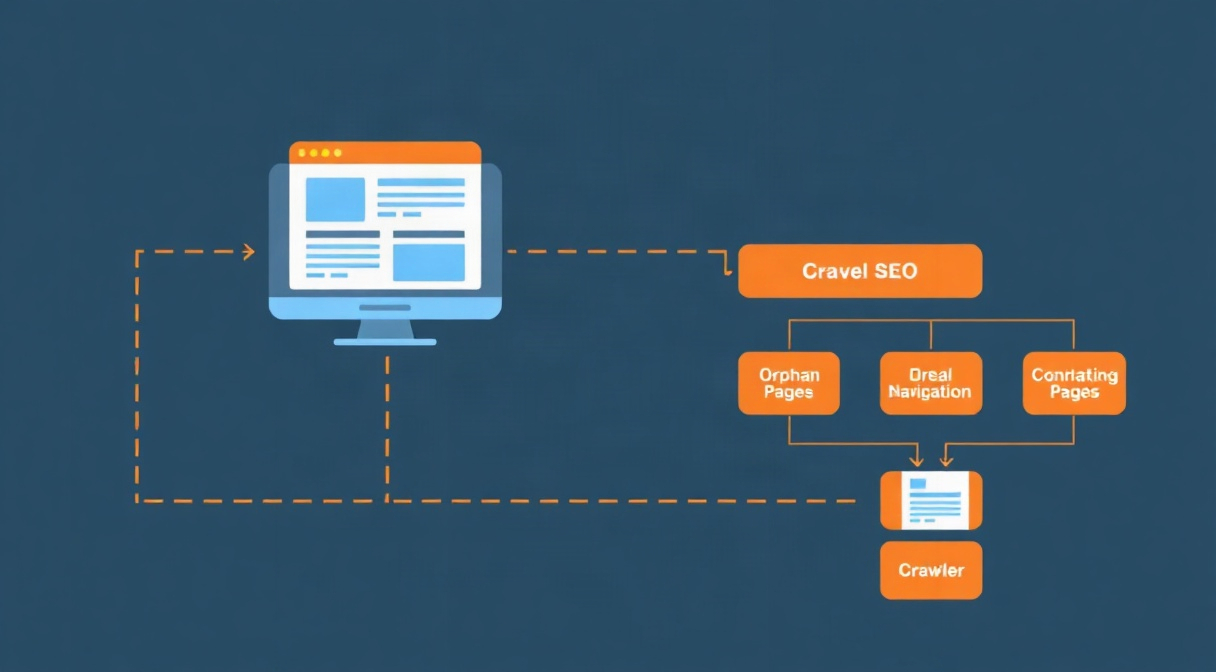
Orphan pages SEO is one of the most overlooked technical issues costing enterprises thousands in lost rankings and wasted crawl budget. These isolated pages sit invisible to search engines, unable to pass or receive link equity, yet still consume precious crawler resources. For large websites with thousands or millions of URLs, orphan pages silently sabotage your organic performance.
If you struggle to find orphan pages or know how to fix orphan pages site problems at scale, this guide delivers actionable solutions. We will walk through identification methods, audit frameworks, and resolution strategies that protect your crawl budget while maximizing ranking potential.
What Are Orphan Pages and Why They Destroy SEO Performance
Orphan pages exist when a URL has zero internal links pointing to it from other pages on your domain. Search engine crawlers discover content primarily through links. Without these pathways, pages become unreachable during normal crawling, even if they appear in XML sitemaps.
These pages create three critical problems. First, they waste find orphan pages efforts because crawlers repeatedly attempt to process URLs without proper context. Second, they cannot accumulate PageRank or topical authority since no internal links pass equity. Third, they confuse search engines about site architecture, potentially triggering quality algorithm assessments.
Common causes include:
- Legacy content from migrations or redesigns
- Faceted navigation filters generating unique parameter URLs
- E-commerce product variations without proper canonicalization
- Staging environments accidentally exposed to production
- Marketing campaign landing pages built without navigation integration
- Auto-generated taxonomies, tags, or author archives
According to Moz’s technical SEO research, orphan pages represent up to 15% of URLs on enterprise websites—an alarming figure that directly correlates with indexing bloat and diminished domain authority distribution.
How to Find Orphan Pages Using Multiple Data Sources
Accurate detection requires cross-referencing multiple datasets because single-source analysis produces false positives. Here is the reliable methodology we use to find orphan pages at GlobalSEOFlow for client audits.
Cross-Reference Crawl Data With Log Files
Start with a comprehensive crawl using Screaming Frog, Sitebulb, or DeepCrawl configured to respect robots.txt and follow JavaScript rendering. Export all discovered URLs. Then obtain server log files covering 30-90 days and extract Googlebot-requested URLs. Compare lists—URLs appearing in logs but missing from crawl reports indicate potential orphan status.
Splunk Log Analysis and Backlink Verification
Advanced practitioners use log analysis tools to identify URLs receiving crawler attention without internal link support. Simultaneously, verify discovered URLs in Google Search Console’s external links report. Pages with backlinks but zero internal links represent high-priority orphan cases requiring immediate attention to fix orphan pages site architecture.
Sitemap and GA/GSC Comparison
Extract all URLs submitted through XML sitemaps. Cross-check against Google Analytics landing page reports and Google Search Console indexing data. URLs with traffic or impressions yet absent from crawl data strongly suggest orphan status. Search Engine Journal’s orphan page methodology emphasizes this triple-verification approach for enterprise accuracy.
Conducting a Strategic Orphan Page Audit
Not all orphan pages deserve identical treatment. A strategic audit categorizes discoveries by business value, traffic potential, and technical constraints to prioritize remediation.
Value-Based Classification Framework
Sort identified orphan pages into four quadrants. High-value pages with search traffic potential require immediate integration into site architecture. Low-value legacy content with no traffic warrants removal and 410 status codes. Orphan pages with valuable backlinks need either internal linking or 301 redirects to preserve equity. Auto-generated parameter URLs demand canonicalization or robots.txt blocking.
Commercial Impact Assessment
For e-commerce platforms, prioritize product and category page orphans. A single orphaned product page with purchase intent keywords represents direct revenue loss. Content publishers should focus on orphaned articles targeting monetizable topics. SaaS companies must identify orphaned feature pages that support conversion funnels. This business-first approach ensures orphan pages SEO efforts deliver measurable ROI.
Technical Debt Quantification
Calculate crawl budget impact by comparing orphan page volume against total indexable URLs. Sites exceeding 20% orphan saturation typically experience delayed indexing for new content and reduced crawl frequency for priority pages. Document this baseline to measure remediation success through improved crawl stats in Google Search Console.
Proven Methods to Fix Orphan Pages Site Architecture
With prioritized lists in hand, execute targeted fixes based on page classification. Here are proven strategies to fix orphan pages site issues permanently.
Integration Into Internal Link Structures
High-value orphan pages belong in primary navigation elements. Add contextual links from relevant category pages, hub content, or related articles. Implement breadcrumb trails showing hierarchical position. For large inventories, dynamic linking modules based on content similarity algorithms automatically surface appropriate connections without manual overhead.
Strategic Redirects and Consolidation
Orphan pages with thin or duplicate content rarely deserve resurrection. Implement 301 redirects to the most relevant existing URL, passing any accumulated signals. Where multiple orphan variants exist for similar intents, consolidate into single authoritative resources. Update internal links previously pointing to orphaned destinations to eliminate redirect chains.
Robots Meta and Parameter Handling
Low-value auto-generated orphans require exclusion rather than integration. Apply noindex, follow directives to prevent indexing while allowing equity flow. For parameter-driven URLs, implement proper canonical tags pointing to parent pages. Consider URL parameter tools in Google Search Console for explicit crawler guidance. For truly useless orphans, deploy 410 Gone responses that signal permanent removal and prompt faster index elimination than 404s.
Preventing Orphan Pages From Recurring
Fixing existing orphans prevents past damage; preventing future creation protects long-term performance. Implement these systematic controls to maintain clean architecture.
Pre-Production Crawl Validation
Require technical SEO crawls before any publishing system deployment. Automated checks should flag new URLs without minimum internal link thresholds. Integrate orphan detection into CI/CD pipelines so developers receive immediate alerts when builds introduce unlinkable pages.
Ongoing Monitoring Protocols
Schedule monthly orphan audits using automated tools. Set Google Search Console alerts for indexing coverage drops that may indicate orphan proliferation. Maintain living documentation of approved URL patterns, expected navigation paths, and parameter handling rules that all teams reference during content creation.
Organizational Process Integration
Train content, development, and marketing teams on orphan page risks. Establish mandatory checklist items requiring internal link planning before publication approval. For agencies and enterprises, include orphan prevention clauses in vendor contracts when outsourcing website development or content production.
FAQ: Expert Answers on Orphan Pages SEO
Can orphan pages still rank in Google?
Occasionally, if they possess strong external backlinks or appear in sitemaps. However, they rank far below their potential because they receive no internal link equity, lack contextual relevance signals, and often suffer delayed discovery. Sustainable rankings require proper architectural integration to support competitive performance.
How often should I audit for orphan pages?
Enterprise sites with frequent publishing need monthly audits. Smaller sites with stable architectures may quarterly suffice. Always audit immediately after platform migrations, redesigns, or content management system changes that alter URL structures or navigation logic.
Are all orphan pages harmful to SEO?
Not universally. Intentionally isolated pages—such as dedicated PPC landing pages, email campaign destinations, or thank-you confirmation screens—serve specific purposes where internal linking would distract from conversion goals. Distinguish strategic orphans from accidental ones through documented business justification for each isolated URL.
What tools best find orphan pages across millions of URLs?
For large-scale detection, combine Screaming Frog with memory extensions for crawling, Splunk or BigQuery for log file analysis at volume, and enterprise SEO platforms providing integrated dashboards. Ahrefs blog recommends layering crawler data with backlink indices and sitemap verification for comprehensive coverage.
Conclusion: Reclaim Your Crawl Budget and Ranking Potential
Orphan pages SEO demands proactive identification, strategic auditing, and systematic resolution. Organizations that consistently find orphan pages and effectively fix orphan pages site problems unlock significant performance improvements without content creation investments.
Start your audit today using the cross-referencing methodology outlined above. Prioritize fixes by commercial value, implement robust prevention protocols, and monitor continuously. The crawl budget you reclaim and the authority you redistribute will compound across every page in your index.
Ready to eliminate orphan pages destroying your organic performance? Visit GlobalSEOFlow.com for comprehensive technical SEO audits, crawl optimization strategies, and enterprise architecture solutions that protect your search visibility at scale.