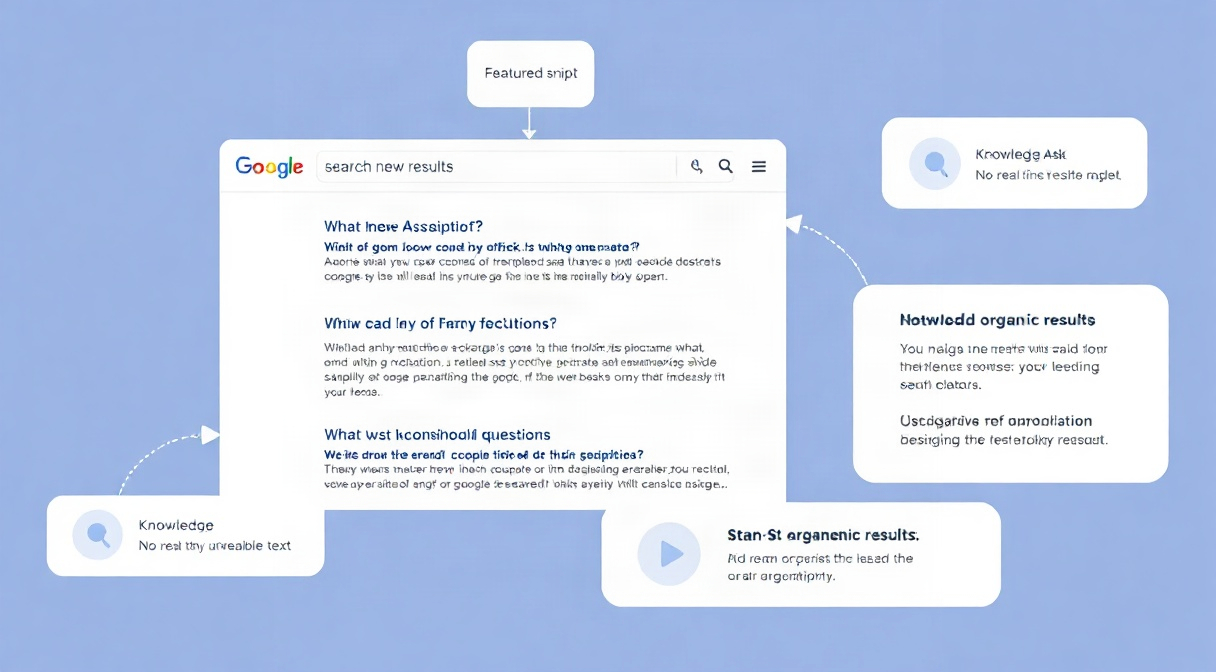
Ranking in the traditional blue links is only part of the search visibility opportunity. A results page may also show featured snippets, People Also Ask (PAA) questions, and knowledge panels that answer queries or introduce brands before a searcher clicks. SERP features optimization helps you understand these opportunities and shape useful, accurate content that can qualify for them.
There is no guaranteed formula: Google chooses which features to show and which sources to display. But you can improve your chances by matching search intent, structuring information clearly, strengthening entity signals, and checking results regularly. This guide turns those principles into a practical workflow.
1. Map SERP Features to Search Intent Before You Edit
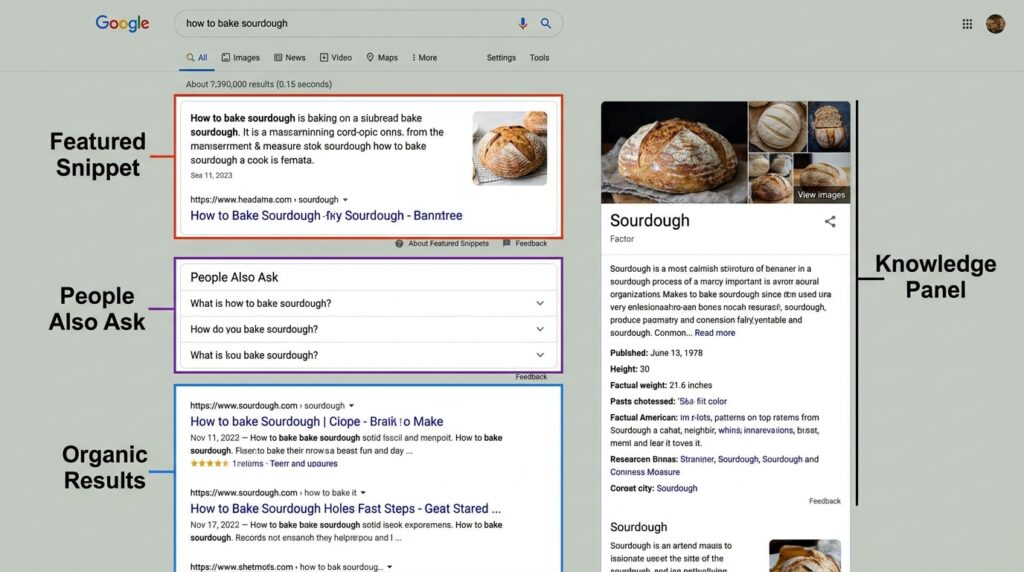
Start with the results page, not a formatting trick. SERP features appear when Google believes a particular layout will help people complete a task. A query such as “how to clean a cast-iron pan” may call for concise instructions, while “cast-iron pan brands” may surface product listings and reviews. SERP features optimization begins by identifying what searchers need and which result types Google already considers useful.
Choose a small set of high-value queries and review each one in the location, language, and device context that matters to your audience. Record the feature types, the pages currently displayed, and the answer format. A featured snippet might be a paragraph, ordered steps, a table, or a video. A PAA box reveals related questions, while a knowledge panel usually summarizes an entity such as a company, person, place, or product.
Use Google Search Console to find queries where your pages already receive impressions, then manually inspect representative results. Search Console provides query, page, impression, click, and average-position data; it does not reliably report every feature appearance. A rank-tracking platform such as Ahrefs or another SERP monitoring tool can help track feature presence over time, but treat its observations as directional because results vary by location and user context.
Build a simple opportunity table with columns for query, intent, current page, visible feature, likely source, and next action. Prioritize queries where your page already ranks near the top, the feature matches your content, and a better answer would serve a real user need. A page at position 30 with no topical relevance is usually a weaker candidate than a page on page one that gives a good answer but hides it in a long introduction.
- Informational intent: Look for definitions, concise explanations, process steps, and PAA questions.
- Comparative intent: Check for tables, product summaries, review results, and follow-up questions.
- Brand or entity intent: Look for a knowledge panel, official site links, social profiles, and consistent facts.
Do not assume a feature is always desirable. A direct answer can satisfy the searcher without a click, so the value may be awareness rather than a site visit. Before changing a page, decide whether the feature can introduce your brand, support a conversion journey, or build authority. Strong SERP features optimization connects visibility opportunities to business value instead of treating every impression as a win.
Finally, capture a baseline: organic clicks, impressions, click-through rate, conversions, and the current page’s ranking trend. Note the date and search context of your observation, but do not treat one screenshot as permanent evidence. Search layouts change, and competitors can replace one another. A documented baseline lets you judge whether your edits improved visibility rather than relying on memory or a single ranking check.
2. Use Clear Answers and Structure for Featured Snippets
Featured snippets are selected answers that appear prominently in some search results. Google may extract a passage, list, or table from a page it considers relevant; adding special markup does not guarantee selection. Effective featured snippet strategies therefore combine a direct answer with comprehensive context, credible sourcing, and a page that genuinely addresses the query.
First, align the page with the query’s likely answer type. For “what is a canonical URL,” write a plain-language definition near the top of the relevant section. For “how to submit a sitemap,” use a numbered sequence. For a comparison query, present meaningful criteria in a readable table. These structures help people scan and make the page’s information easier to interpret, whether or not Google selects it as a snippet.
Keep the answer self-contained. A reader should understand the passage without needing to decode references such as “as mentioned above.” For example, an article about watering basil might state: “Water basil when the top inch of soil feels dry, then let excess water drain from the pot.” The surrounding section can explain how pot size, indoor heat, and drainage affect that guidance. Avoid forcing a target word count for the snippet; answer fully and naturally.
Make headings descriptive and use HTML in a logical order. A clear H2 can introduce a topic, with H3 headings for meaningful subtopics. Use ordered lists when sequence matters and tables only when rows and columns make comparison easier. Avoid using headings solely to repeat keywords, and do not put essential text inside images where search engines and assistive technologies may not interpret it as readily.
- Identify a query with a visible paragraph, list, or table snippet.
- Review the current snippet and the pages that supply it.
- Write a concise, accurate answer that fits the user’s question.
- Add supporting details, examples, caveats, and trustworthy sources nearby.
- Recheck the result and measure page performance after the update.
For example, a software company targeting “how to export a CRM contact list” should not bury the steps beneath a brand history. Put the task steps in order, name the relevant interface labels, and explain permissions or file-format limitations. If the interface changes frequently, verify the instructions with the product team before publishing. Accuracy is more valuable than imitating the visible snippet’s length.
Common failures include rewriting a page to match a snippet while removing useful detail, adding a list that does not answer the query, and making unsupported claims to sound definitive. Those choices can reduce trust and hurt the page’s usefulness. Strong SERP features optimization keeps the full article valuable, even if the featured result never appears. Use the Search Console performance report to compare clicks and impressions for the target query group, and annotate significant edits so you can distinguish their impact from seasonal demand or algorithm changes.
3. Build Useful Question Paths for People Also Ask
People Also Ask boxes expose related questions that searchers may explore next. They are useful for discovering language and subtopics, but they are not a fixed checklist: questions can vary by query, location, and time. Good people also ask optimization means answering relevant follow-up questions clearly within the right page, not adding a large FAQ section to every article.
Collect questions from the live results for your priority query and related searches. Note which questions recur across variations, then compare them with customer support tickets, sales calls, community discussions, and your site search data. Search suggestions and keyword tools can reveal additional wording, but validate the questions against your audience and subject matter. A question is an opportunity only when it belongs naturally in your content and you can answer it accurately.
Group questions by the job they help a user complete. For an article on choosing a running shoe, groups might include fit, terrain, durability, and replacement timing. Place each answer beside the main section it supports, rather than scattering unrelated answers at the bottom. If the questions represent distinct needs and deserve substantial coverage, create separate pages and connect them with useful internal links instead of forcing every topic into one oversized article.
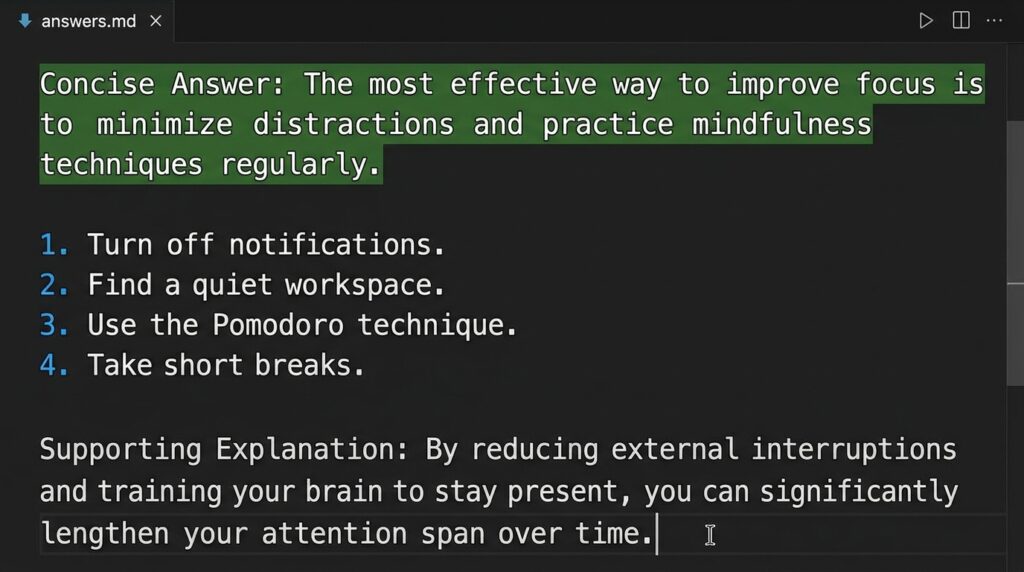
Write the question as a clear heading when it improves navigation, and answer it immediately in a short paragraph. Follow with qualifications or examples that add value. For instance, a guide answering “How often should I replace running shoes?” can explain that replacement depends on mileage, shoe condition, runner, and terrain rather than giving a universal deadline. This protects readers from false precision and gives search engines a clear, contextual answer.
A practical question map can include the exact wording, user intent, planned URL, answer owner, and evidence needed. This is especially helpful for regulated or technical subjects, where an expert should review claims. For a financial question, for example, the content team may need a qualified reviewer and a link to an authoritative primary source. A question-focused page still needs the same editorial standards as any other page.
- Answer the question in the first sentence or two.
- Use a specific example or limitation when it prevents misunderstanding.
- Link to a deeper resource if the answer opens a larger topic.
- Remove questions that are repetitive, irrelevant, or impossible to answer responsibly.
Measure outcomes carefully. Search Console may show changes in impressions and clicks for the question’s wording, but it does not provide a complete PAA report. Review SERP tracking observations alongside analytics, engagement, and conversions; do not attribute every fluctuation to a single heading. A successful people also ask optimization effort can improve topical coverage and reader experience even when a page is not displayed in the PAA box.
A common failure is publishing thin answers that repeat the question without resolving it. Another is creating dozens of near-duplicate question pages, which can confuse users and dilute internal authority. Keep answers distinctive, maintain one clear primary page for each substantial intent, and revisit them when products, policies, or evidence change. This creates a useful question path rather than a collection of keyword targets.
4. Strengthen Entity Signals for Knowledge Panels
Knowledge panels are information boxes that summarize recognized entities, such as organizations, people, places, and products. They are not simply a rich snippet you can switch on with a plugin. Google assembles information from sources it considers relevant and may display a panel only when it identifies an entity and has enough confidence in its facts. SERP features optimization for knowledge panels is therefore a long-term effort to make identity and information consistent, verifiable, and easy to understand.
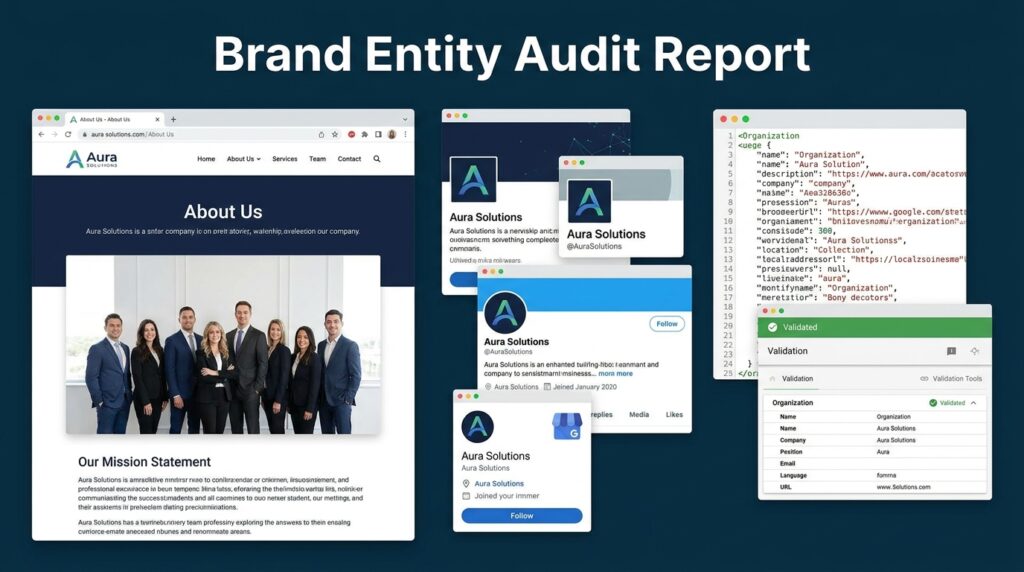
Begin with entity clarity on your own site. State the organization’s official name, what it does, where it operates if relevant, and how users can contact it. Maintain a strong About page, accurate leadership biographies, clear product descriptions, and consistent branding. If the organization has alternate names or a history of rebranding, explain those relationships instead of leaving search engines and people to infer them.
Structured data can help describe entities and connect properties, but it does not guarantee a panel or a particular display. Use relevant Schema.org types, such as Organization or Person, only when the marked-up facts are visible and accurate on the page. Validate markup with Google’s Rich Results Test when applicable and use Schema.org’s validator to check vocabulary. Fix errors, but remember that valid structured data is not a promise of enhanced results.
Strengthen corroboration beyond your website. Keep official business profiles, social accounts, industry directories, and major public references consistent. Seek editorial coverage and citations that accurately identify the entity; do not create fake profiles or buy low-quality links in an attempt to manufacture authority. For local businesses, keep core details such as name, address, phone number, and hours aligned across the official site and trusted listings. Update outdated facts at the source whenever possible.
For an individual expert, publish a clear author profile that describes relevant credentials and work, link to appropriate professional profiles, and attribute articles consistently. For a company, connect the website to official social profiles and provide accurate organization details. Where appropriate, add sameAs links in structured data to authoritative profiles that genuinely represent the same entity. Never mark up a relationship that is uncertain or misleading.
Knowledge panels can contain errors or combine information incorrectly. When an eligible panel offers a feedback or claim process, follow the platform’s current instructions and provide verifiable evidence. Keep a record of the facts submitted, the sources supporting them, and the date you checked the panel. Avoid promising stakeholders that a panel will appear by a specific deadline; eligibility and display decisions remain outside your direct control.
Measure progress using practical signals: branded search impressions, visits to official pages, referral traffic from credible profiles, and whether key facts are consistent in search results. A panel may increase recognition while reducing the need for a click, so evaluate brand visibility as well as sessions. The most sustainable knowledge-panel work is accurate entity management, not a short-term markup trick. If information changes, update the primary source and relevant profiles so your digital footprint stays coherent.
5. Test, Measure, and Maintain Your SERP Visibility
Once you have identified and improved an opportunity, treat it as an experiment. SERP features optimization is not a one-time publishing task because rankings, search layouts, competitors, and user needs change. Create a record of the target queries, affected URLs, edits, and expected outcome. This gives your team a useful reference when traffic shifts and prevents repeated changes based on guesswork.
Use Search Console to compare impressions, clicks, click-through rate, and average position for the relevant pages and queries. Filter by date and compare similar periods, allowing for seasonality where possible. Analytics can help show whether organic visits reached important actions such as newsletter sign-ups, product inquiries, or purchases. If a feature produces visibility but few clicks, that may still be valuable for brand awareness; assess it against the purpose of the page and the business outcome.
Keep a SERP observation log with the search query, market, device, date, feature shown, displayed source, and screenshot or notes. A tracking platform can scale observations and alert you to changes, while manual checks help confirm the actual user-facing result. Do not assume one tool captures all personalized or localized variations. When reporting to stakeholders, distinguish measured facts from estimates and explain the limitations of the data.
Change one meaningful element at a time when practical. If you revise the answer, title, internal links, schema, and page layout together, it becomes difficult to know what contributed to a result. Large content improvements may require several changes, but document them as a single controlled release and compare performance before and after. Give search systems time to recrawl the page, then check again instead of making daily edits in response to noise.
Build a maintenance routine around content risk and value. Review high-traffic instructional pages when product interfaces change; revisit medical, financial, or legal content with qualified reviewers; and refresh business details when locations, hours, or leadership change. Remove obsolete instructions, broken links, and unsupported claims. A page that once earned a snippet can lose it if its answer becomes outdated or a competitor provides a more useful response.
- Weekly or biweekly: Monitor priority queries and note major feature changes.
- Monthly: Review Search Console trends, affected URLs, and business outcomes.
- Quarterly or after a major change: Audit accuracy, internal links, structured data, and entity details.
Use a prioritization score to keep work realistic. Rate each opportunity by expected audience value, likelihood of improving the result, business relevance, and effort. A small edit to a useful page with strong existing visibility may be a better investment than rebuilding an entire article for a low-value query. Consider the trade-off between a concise answer and the depth needed for trust: readers should get the answer quickly without losing the context required to act safely.
Finally, share findings across SEO, editorial, product, and support teams. Search questions can reveal confusing product language; support questions can expose content gaps; and editorial reviewers can catch claims that a snippet-focused rewrite made too broad. This feedback loop makes SERP features optimization part of content quality management, not a separate exercise in chasing layouts. Document what worked, what did not, and what you will test next.
Frequently Asked Questions
Can you guarantee a featured snippet?
No. Google selects results based on its systems, the query, and the available content. Clear structure and a direct, accurate answer can improve eligibility, but no formatting technique or schema guarantees a featured snippet. Monitor changes and continue serving the full intent of the page.
Does FAQ schema make content appear in People Also Ask?
No. Structured data does not guarantee a PAA placement. Use question headings and concise answers when they help readers, and apply schema only when it accurately describes visible page content and complies with current search guidelines.
How often should I check SERP features?
Check priority queries on a regular schedule, such as weekly or monthly, and after substantial content or product changes. Use Search Console for performance trends and SERP observations for feature context. Avoid reacting to a single fluctuation without checking whether it persists.
Are knowledge panels controlled by website owners?
No. Website owners can improve entity clarity, keep authoritative information consistent, and use eligible feedback processes to suggest corrections. Search platforms decide whether to display a panel and which information to include.
Conclusion: Make SERP Visibility Part of Content Quality
Winning visibility beyond blue links takes research, clear answers, trustworthy information, and ongoing measurement. Start with the queries that matter, match content to intent, build useful question paths, and keep entity facts consistent. Treat each feature as an opportunity to help searchers—not a guaranteed shortcut to rankings or clicks.
For more practical SEO guidance and support building a visibility plan, explore GlobalSEOFlow. Choose one high-value page, document its baseline, and make your next improvement measurable.