Local SEO for small business has become the battleground where visibility translates directly into revenue. When potential customers search for services “near me” or in specific cities, Google decides which businesses deserve the spotlight. For small business owners, mastering this digital real estate isn’t optional—it’s survival.
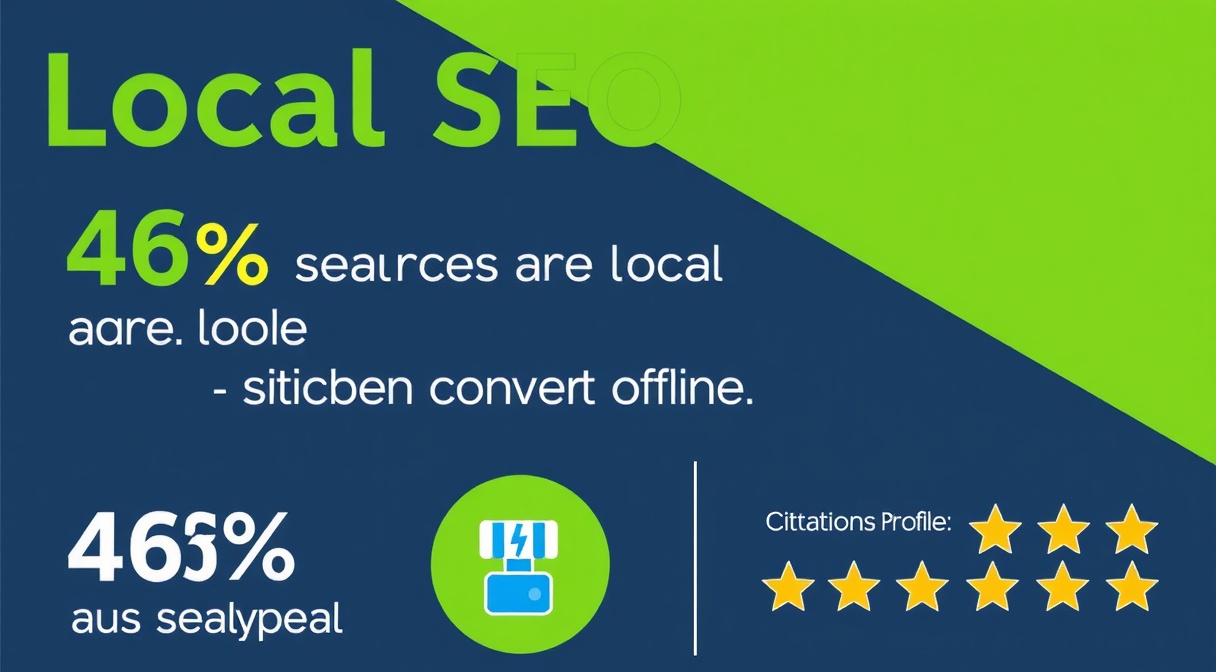
The statistics paint a compelling picture. According to Search Engine Journal, 46% of all Google searches seek local information, and 78% of local mobile searches result in offline purchases. Yet most small businesses remain invisible in these critical moments, buried beneath competitors who understand the mechanics of local search.
This comprehensive guide dismantles the complexity surrounding local rankings. You’ll discover actionable frameworks for Google Business Profile optimization, citation building that actually moves the needle, and technical strategies that transform your digital presence from invisible to unavoidable.
1. The Foundation: Understanding How Local SEO Actually Works
Before diving into tactics, grasp the fundamental architecture. Google’s local algorithm operates on three distinct pillars: relevance, distance, and prominence. Each factor determines whether your business appears in the coveted Local Pack—the map and three listings dominating local search results.
Relevance: Matching Intent to Your Offerings
Relevance measures how well your business matches what searchers seek. This extends beyond basic category selection. Google’s natural language processing evaluates your entire digital footprint—website content, reviews, Q&A interactions, and even photo captions—to determine contextual alignment.
Small businesses often sabotage themselves here through generic descriptions. A bakery describing itself simply as “food establishment” loses to competitors specifying “artisan sourdough bakery” or “gluten-free wedding cake specialist.” Specificity signals expertise, and expertise drives rankings.
Distance: Geographic Proximity Factors
Distance calculations aren’t straightforward radius measurements. Google weighs multiple location signals:
- Verified business address in Google Business Profile
- Service area definitions for businesses without physical locations
- User location context (IP address, device GPS, search history)
- Location mentions in reviews and website content
Businesses with physical addresses in city centers traditionally held advantages, but Google’s evolving algorithms increasingly recognize service-area businesses and mobile professionals. The key lies in clear, consistent geographic signaling across all platforms.
Prominence: Building Digital Authority
Prominence encompasses your entire online reputation—reviews, citations, backlinks, and brand mentions. Think of it as your digital footprint’s cumulative weight. Established businesses with decades of community presence often dominate here, but strategic small businesses can rapidly close gaps.
According to Moz’s Local Search Ranking Factors, prominence factors now account for approximately 25% of local pack ranking weight, making systematic reputation building essential for competitive positioning.
2. Google Business Profile Optimization: Your Digital Storefront
Your Google Business Profile (formerly Google My Business) functions as the command center for local visibility. Google Business Profile optimization demands meticulous attention—neglect here undermines every other local SEO effort.
Complete Every Available Field
Google rewards completeness. Profiles with comprehensive information achieve 70% higher engagement rates. Essential fields include:
- Primary and secondary categories: Select the most specific primary category available. A “plumber” outranks “home services” for plumbing searches. Add relevant secondary categories to capture adjacent queries.
- Business description: Craft 750 characters incorporating natural keyword variations while emphasizing unique value propositions.
- Attributes: Enable all applicable attributes—wheelchair accessibility, outdoor seating, free WiFi, women-led, veteran-owned. These filter into specialized searches.
- Products and services: Catalog offerings with descriptions, pricing, and imagery. This content feeds directly into Google’s understanding of your relevance.
- Q&A section: Proactively populate common questions before competitors or random users define your narrative.
Strategic Photo and Video Implementation
Visual content dramatically impacts engagement metrics that influence rankings. Businesses with photos receive 42% more requests for directions and 35% more click-throughs to websites.
Optimal visual strategy includes:
- High-resolution exterior shots identifying your location
- Interior images showcasing atmosphere and capacity
- Product/service photography with contextual usage
- Team photos building personal connection
- Video content under 30 seconds highlighting unique experiences
Upload consistently—weekly additions signal active management to Google’s algorithms.
Posts, Updates, and Engagement Protocols
Google Posts function as micro-blogging within your profile. Weekly posts covering offers, events, and updates maintain algorithmic freshness while driving direct engagement. Structure posts with clear headlines, compelling imagery, and explicit calls-to-action.
Response management proves equally critical. Reply to all reviews within 24-48 hours, addressing negative feedback professionally and specifically. Answer Q&A prompts promptly, as these responses become permanent profile fixtures.
3. Citation Building: Establishing Consistent Digital Presence
Citations—mentions of your business name, address, and phone number (NAP) across the web—function as trust signals validating your existence and location. Inconsistent citations confuse algorithms and fragment ranking authority.
The Core Citation Ecosystem
Priority platforms demanding perfect consistency:
- Data aggregators: Localeze, Data Axle, and Foursquare distribute information to hundreds of downstream platforms
- Major directories: Yelp, Bing Places, Apple Maps, Facebook Business
- Industry-specific platforms: Healthgrades (medical), Avvo (legal), TripAdvisor (hospitality)
- Local chambers and business associations: Geographic relevance signals
NAP Consistency Protocols
Standardize your business information before any citation building:
- Determine exact formatting for address abbreviations (St. vs Street, Suite vs Ste.)
- Establish primary phone number and extension formatting
- Create consistent business name usage (avoid adding location descriptors unless legally part of name)
- Document standardized website URL format (https vs http, trailing slashes)
Audit existing citations using tools like Moz Local or BrightLocal, prioritizing correction of high-authority platforms first. Even minor discrepancies—”Ave” versus “Avenue”—can dilute ranking signals.
Building New Citation Opportunities
Systematic expansion strategies:
- Local media outreach: Pitch stories earning mentions in regional publications
- Sponsorship and partnership listings: Community event sponsorships, nonprofit partnerships, supplier relationships
- Guest content contributions: Local business blog contributions with author bios
- Professional association memberships: Industry organization directories
- Local resource pages: Chamber of commerce business lists, neighborhood guides
Quality outweighs quantity. Ten consistent, authoritative citations outperform fifty low-quality, inconsistent listings.
4. Review Generation and Management Strategies
Reviews constitute both ranking factor and conversion driver. Google’s local algorithm explicitly incorporates review quantity, velocity, diversity, and sentiment. Meanwhile, 87% of consumers read local business reviews before purchasing decisions.
Ethical Review Acquisition Systems
Prohibited practices—fake reviews, review gating, incentivized exchanges—trigger penalties destroying visibility. Sustainable approaches include:
- Integrated request workflows: Automated follow-ups 24-48 hours post-service delivery
- Multiple platform options: Direct customers to platforms where review deficits exist
- Staff training: Empowering team members to request reviews at positive interaction moments
- QR code implementation: Physical materials enabling one-tap review submission
- Review link optimization: Pre-populated Google review links removing friction
Response Frameworks That Build Trust
Review responses serve dual purposes—algorithmic engagement signals and public reputation management. Structure responses using:
- Positive reviews: Specific gratitude referencing details mentioned, reinforcing brand values
- Negative reviews: Immediate acknowledgment, offline contact invitation, no defensive positioning
- Neutral reviews: Appreciation for feedback, commitment to improvement
According to Ahrefs’ local SEO research, businesses responding to reviews achieve 16% higher conversion rates than non-responsive competitors.
5. On-Page and Technical Local SEO Implementation
Your website anchors local SEO efforts, converting profile visibility into actionable business outcomes. Technical optimization ensures search engines understand geographic relevance while user experience drives conversion.
Location Page Architecture
Single-location businesses require comprehensive homepage localization. Multi-location operations need dedicated pages per service area.
Essential location page elements:
- Unique, substantial content (500+ words minimum) avoiding duplicate descriptions
- Embedded Google Map with verified business listing
- Local schema markup implementing LocalBusiness structured data
- Neighborhood and regional keyword natural integration
- Customer testimonials with geographic specificity
- Localized imagery with descriptive alt text
- Clear NAP presentation matching Google Business Profile exactly
Schema Markup Implementation
Structured data helps search engines parse business information efficiently. Critical schema types for local SEO for small business:
- LocalBusiness: Core business identification with name, address, geo-coordinates
- OpeningHoursSpecification: Detailed operating schedule
- AggregateRating: Review summary integration
- Service: Specific offering descriptions
- FAQPage: Question-answer content eligible for rich results
Validate implementation using Google’s Rich Results Test before deployment.
Mobile Optimization Imperatives
Local searches predominantly occur on mobile devices. Technical requirements include:
- Sub-three-second page load speeds
- Click-to-call phone number functionality
- Thumb-friendly navigation and button sizing
- Accelerated Mobile Pages (AMP) consideration for content-heavy sites
- Progressive Web App features enabling offline functionality
Frequently Asked Questions About Local SEO for Small Business
How long does local SEO take to show results?
Initial visibility improvements typically emerge within 4-8 weeks for established businesses with existing digital presence. New businesses or those with significant citation inconsistencies may require 3-6 months for substantial ranking movement. Google Business Profile optimization changes often reflect within days, while competitive positioning in saturated markets demands sustained effort over 6-12 months. Consistency compounds results—businesses abandoning efforts prematurely sacrifice compounding benefits.
Can service-area businesses without physical locations rank locally?
Absolutely. Google explicitly supports service-area businesses through Google Business Profile settings. Configure your profile to hide address information while defining specific service territories by city, region, or radius. Success requires heightened emphasis on website localization, review generation from serviced areas, and citation building within target markets. Competitive disadvantage exists against physical-location competitors for “near me” searches, but strategic targeting of specific geographic queries yields substantial visibility.
What’s the most common local SEO mistake small businesses make?
NAP inconsistency across platforms destroys more local SEO campaigns than any other factor. Businesses evolve—phone numbers change, addresses relocate, suite numbers get added—yet previous citations persist uncorrected. This fragmentation splits ranking authority and confuses algorithmic confidence. Comprehensive citation auditing before any active optimization prevents this foundational failure. Secondary common errors include category selection too broad for competitive differentiation, neglecting review response protocols, and treating Google Business Profile as static rather than actively managed marketing channel.
How important are backlinks for local SEO compared to traditional SEO?
Backlinks matter substantially less in local SEO than traditional organic search, but remain meaningful differentiation factors. Local pack rankings prioritize proximity and relevance over link authority, whereas localized organic results below the map respond more strongly to traditional ranking signals. Quality local backlinks—regional publications, community organizations, local business partnerships—provide disproportionate value compared to generic national links. Link building efforts should emphasize geographic relevance and community integration over raw domain authority metrics.
Should small businesses hire local SEO agencies or handle optimization internally?
Capability assessment determines optimal approach. Internal management suits businesses with dedicated marketing staff possessing technical aptitude and available time for ongoing optimization. Agency partnerships prove valuable when internal resources are constrained, competitive pressure demands specialized expertise, or technical implementation exceeds internal capabilities. Hybrid approaches—agencies handling technical foundation while internal teams manage ongoing content and engagement—often optimize cost-effectiveness. Regardless of approach, executive understanding of local SEO fundamentals ensures strategic alignment and vendor accountability.
Conclusion: Transforming Local Search Into Sustainable Growth
Mastering local SEO for small business isn’t about gaming algorithms—it’s about building genuine digital infrastructure reflecting real-world business excellence. The businesses dominating local search invest systematically in Google Business Profile optimization, cultivate authentic customer relationships generating organic reviews, and maintain consistent presence across the citation ecosystem.
The competitive landscape rewards persistence. Each optimized element compounds with others, creating visibility moats increasingly difficult for competitors to breach. Small businesses executing these strategies consistently outperform larger competitors relying on brand recognition alone.
Your local market contains customers actively searching for exactly what you offer. The question isn’t whether local SEO works—it’s whether you’ll position your business to capture that demand.
Ready to dominate your local market? Visit GlobalSEOFlow.com for advanced local SEO strategies, implementation templates, and expert guidance transforming search visibility into sustainable business growth. Your competitors are optimizing. The opportunity window won’t remain open indefinitely.