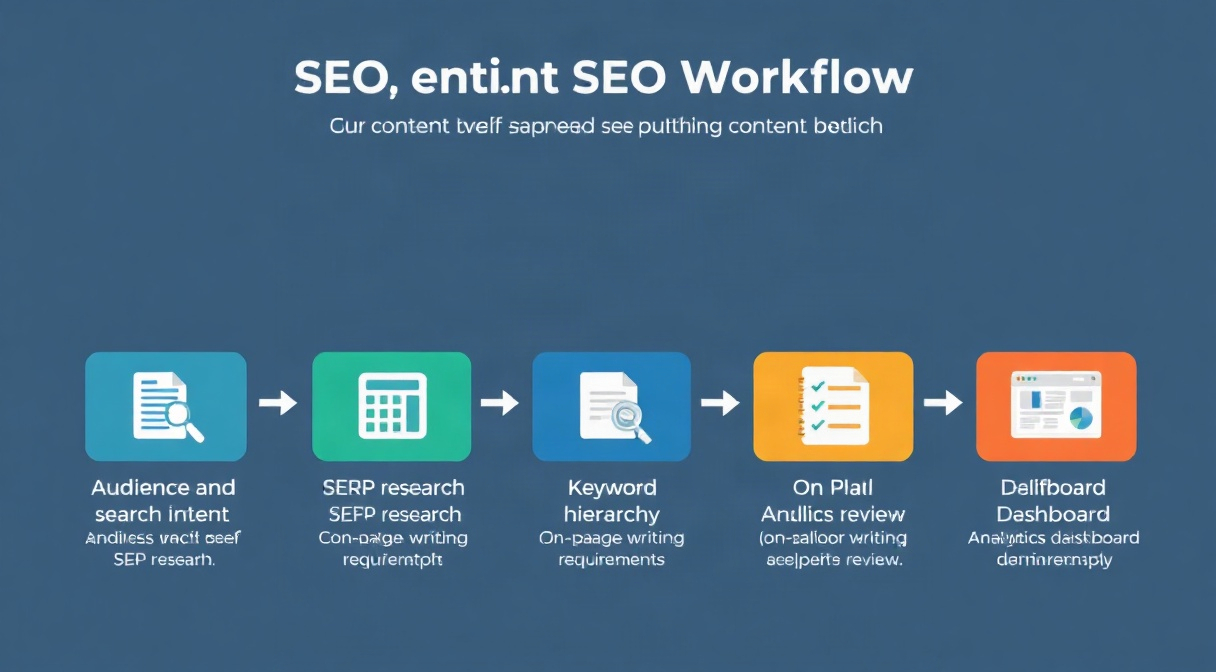
A writer can follow a keyword list perfectly and still produce a page that misses what searchers need. The gap is usually not effort; it is a lack of shared direction about intent, scope, evidence, and on-page requirements. A well-built seo content brief template turns research into clear decisions a writer can use without turning the assignment into a rigid script.
This guide shows how to create a practical brief from search results through final quality checks. You will learn what to include, what to leave to the writer, and how to use the same framework across different content types. The goal is a page that serves readers first while giving your team a repeatable way to align content with search opportunities.
1. Set the Brief’s Goal and Match Search Intent
Begin with the job the page needs to do, not with a list of headings. A brief should state the intended audience, the problem they are trying to solve, and the action or understanding they should have after reading. That context helps writers make better choices when research reveals more possible subtopics than the page can reasonably cover.
Separate the business objective from the searcher’s objective. A business may want qualified demo requests, while a searcher may want to compare options before speaking with a vendor. The page can support both, but the brief should not force an early sales pitch into an informational article. Identify the reader’s likely stage, their prior knowledge, and the next useful step.
Next, classify the dominant search intent. Review the current results for the primary query and related searches. Look for the kinds of pages ranking, their formats, recurring subtopics, and the questions they answer. A results page dominated by step-by-step guides signals a different content need from one filled with product pages, comparison pages, or local listings.
Turn observations into an intent statement
Write a short statement the writer can test throughout drafting. For example: “The reader is a small marketing team member who needs a repeatable way to give freelance writers SEO direction; they want a usable framework and examples, not a tool roundup.” This statement gives the article a center of gravity. It also makes it easier to reject additions that are interesting but do not help the intended reader.
Do not treat the current search results as a command to copy competitors. Results can be mixed, personalized, or influenced by fresh changes. Use them as evidence about the likely expectation, then look for a useful angle your brand can support with expertise. If top pages all define the concept but none show how to handle conflicting keyword intent, that gap may be a valuable opportunity.
Record the outcome and boundaries
In the seo content brief template, capture the primary goal, reader, funnel stage, intent, content format, and boundaries. Include what the article should accomplish and what it should not attempt. For a tutorial, that might mean explaining the process with an example while avoiding a broad introduction to every SEO discipline.
- Reader: Role, experience level, and practical constraint.
- Intent: The question or task that brought the reader to the page.
- Outcome: What the reader should understand or be able to do.
- Format: Guide, comparison, checklist, landing page, or another fit.
- Boundary: Topics that belong in a separate page or are outside scope.
A clear brief is especially useful when several stakeholders have different expectations. The marketer may care about coverage, the editor about clarity, and the business owner about leads. State the shared reader outcome first, then explain how the page can support a relevant business goal without undermining usefulness. This alignment prevents late-stage rewrites driven by preferences that were never agreed upon.
2. Research the SERP and Build a Useful Content Angle
Search results research should answer practical questions: what does a successful page need to satisfy, where are the content gaps, and what evidence should the writer use? A seo content brief template is stronger when the research behind it is recorded as observations rather than vague instructions such as “make it comprehensive.” Give the writer enough context to understand why a topic belongs in the article.
Inspect a representative set of results for the target query. Review the page type, title promise, section structure, depth, and freshness of the top organic pages. Note whether search features such as People Also Ask, video results, product listings, or featured snippets appear. These elements can reveal secondary needs, but they do not automatically mean your page must imitate every visible format.
Capture patterns without cloning competitors
Build a small research table with columns for URL, page type, audience, major subtopics, evidence or examples, and apparent strengths or omissions. Tools such as Ahrefs’ SERP overview can help you compare ranking pages and related query data, while a manual review tells you whether those pages actually meet the searcher’s need. Treat tool metrics as clues, not guarantees: ranking difficulty estimates and traffic projections are models, not promises.
For example, if the query is about preparing a brief for SEO writers, you might find that competing pages list fields but rarely explain how to set keyword priorities. That observation supports a differentiated angle: show how to distinguish primary, supporting, and optional terms, and how to communicate that hierarchy. A meaningful angle improves the article; a merely clever headline does not.
When you review competitor pages, record only information that affects the assignment. Copying every heading into a brief can produce a bloated article with redundant sections. Instead, identify recurring expectations, then decide which are essential, which deserve a better explanation, and which should be excluded. Your purpose is to understand the topic landscape and meet reader needs, not to reproduce competitor page architecture.
Use questions and gaps to shape the outline
Collect questions from relevant search features, customer conversations, support tickets, sales calls, and internal experts. Group similar questions by the reader’s task rather than creating one heading for every phrasing variation. A useful brief might note that readers need to know how to select a primary keyword, how to handle close variants, and how to prevent a brief from becoming an overlong checklist.
Distinguish a true information gap from a topic that simply does not belong. A competitor omission is not automatically an opportunity; it may be irrelevant, unsupported, or too specialized for the intended page. Ask whether the proposed material answers a real user question, whether your organization can provide reliable guidance, and whether it strengthens the main page rather than diluting it.
Make the angle explicit in one or two sentences. A content brief for writers seo teams use should explain what makes this particular page worth creating, including its useful perspective, audience fit, or evidence. If the angle cannot be stated plainly, the assignment may need more research or a narrower scope before a writer begins.
Finally, include source expectations. Tell the writer whether to consult subject-matter experts, primary documentation, reputable research, or first-party examples. Search Engine Journal’s guidance on SEO and content can be a useful industry reference, but claims about a specific product or process should be checked against authoritative sources. Specify when a source must be cited and when an internal reviewer should verify technical details.
3. Map Keywords to Topics, Not to a Repetition Target
Keyword direction should clarify what the page is about and how its subtopics relate. It should not tell a writer to insert phrases a fixed number of times. In a useful seo content brief template, keywords are organized by priority and purpose, so the writer can use natural language while covering the concepts searchers expect.
Choose one primary query that represents the page’s central intent. Then list supporting terms, close variants, and relevant questions that add context. Check that those terms belong to the same search task. If one phrase consistently returns a product page and another returns an educational guide, they may need separate pages rather than forced inclusion in one article.
Create a keyword hierarchy
Label terms so the writer understands how much attention each deserves. A practical hierarchy might include:
- Primary query: The central topic and main target for the page.
- Supporting concepts: Subtopics needed to answer the query fully.
- Related language: Natural variants, entities, and terminology readers may use.
- Questions: Specific uncertainties that fit the article’s scope.
- Exclude or separate: Terms that suggest a different intent or deserve another URL.
For an article about a brief, supporting concepts might include search intent, audience, outline, internal links, title tags, and editorial review. The terms should shape useful coverage, not become a checklist that forces awkward prose. Explain why a concept matters and where it belongs, rather than handing over a large export of unfiltered keyword data.
Keyword tools can help uncover variations and related questions. Google Search Console can show queries that already earn impressions for an existing page, while a keyword platform can suggest related terms and comparative demand. Neither tool decides whether two queries belong on the same URL. Check live results and consider whether the same reader would be satisfied by one page serving both searches.
Prevent cannibalization and over-optimization
Before creating a new assignment, check the site for existing pages that target a similar need. Search Console query data, a site search, or a crawl export can help identify overlap. If two pages address the same intent, the right action may be to update, consolidate, or reposition an existing URL rather than publish another competing article.
State placement guidance only where it helps. The primary topic should be clear in the title, introduction, and relevant headings, but writers should not be asked to repeat an exact phrase in every section. Search engines interpret language in context, and readers notice unnatural repetition. Include examples of acceptable phrasing and tell the writer to prioritize clarity over exact-match usage when the two conflict.
Build the outline from reader questions and topic relationships. A section about intent may logically precede keyword mapping because the intent determines which terms belong together. Add a heading only when it helps organize information or signals a useful answer. Avoid turning every related phrase into a separate heading, which often creates thin, repetitive sections.
A strong seo content brief template may also include a short “keyword decisions” note: why this is the primary query, which close variants fit, and what should be excluded. This makes the logic visible to the writer and editor. If keyword data changes or a stakeholder proposes a new phrase, the team can judge it against the same intent rather than adding terms indiscriminately.
4. Specify On-Page SEO and Writing Requirements Clearly
On-page instructions should make quality easier to deliver, not prescribe every sentence. The writer needs to know which page elements are required, which are suggestions, and who will implement technical changes. A useful seo content brief template separates editorial guidance from CMS or developer tasks so that SEO requirements do not disappear between drafting and publishing.
Start with the elements that directly influence the page’s clarity and presentation: a working title, a concise page purpose, recommended URL if needed, title tag direction, meta description goal, heading outline, internal link opportunities, and image or media needs. Make it clear whether the writer is expected to draft metadata or whether an editor will finalize it. The brief should avoid treating character limits as an excuse for vague or unnatural copy.
Give heading and content direction
Provide an outline that indicates the order of major ideas, but leave room for the writer to improve the flow. For each H2, include the question it should answer or the reader benefit it should deliver. For example, rather than saying “include keyword research,” explain that the section should show how to distinguish the primary query from supporting concepts and how to avoid combining unrelated intent.
Describe length as a planning range only when it helps scope the assignment. A word count is not a ranking requirement. A comparison page may need a table and decision criteria; a short answer page may need far less text. Tell the writer to cover the required questions with enough detail to be useful, rather than padding to reach a number.
A seo writing guidelines template can set consistent standards for voice, reading level, spelling, claims, citations, and formatting. Keep these directions specific: “Use short paragraphs and define specialist terms on first use” is more actionable than “make it engaging.” Include brand terminology, prohibited claims, accessibility expectations for image descriptions, and rules for quoting or linking to sources when relevant.
Plan links, metadata, and page experience
For internal links, give the writer relevant destination URLs and explain the relationship. A suggested anchor should describe the destination naturally; it should not be an instruction to repeat an exact-match keyword. Link to a related service page only when it genuinely supports the reader’s next step. Review links after publication to confirm they work and that the destination still fits.
For external citations, name trusted source types or specific authoritative sources when the assignment needs them. Avoid asking writers to cite another article simply because it ranks. Prefer original studies, official documentation, recognized industry resources, and subject experts. The editor should verify that each citation supports the claim directly and that the page does not imply endorsement where none exists.
Metadata instructions should define the promise and the audience rather than supply a rigid formula. The title tag should accurately describe the page and distinguish it from other site pages. The meta description should summarize the benefit and invite a relevant click, without claiming that it guarantees a ranking. If the writer drafts these elements, include them in the review checklist.
Include publishing considerations where they affect the assignment: image requirements, descriptive alt text, table accessibility, structured data eligibility, canonical decisions, or a need to update an existing URL. Structured data should reflect visible, accurate page content and follow search engine guidelines; it is not a substitute for useful writing. Assign technical implementation to the right owner instead of leaving a vague instruction for the writer.
5. Turn the SEO Content Brief Template into a Repeatable Workflow
A reusable seo content brief template works best as a workflow, not a document that gets completed once and forgotten. Assign ownership for research, writing, editing, SEO review, subject-matter checks, and publishing. When people know who makes each decision, feedback is less likely to arrive as contradictory comments in the final draft.
Keep the template structured but not universal in every detail. A product comparison, expert interview, and beginner guide need different evidence and page requirements. Create a core template with stable fields, then add optional modules for formats such as case studies, landing pages, local content, or research reports. This preserves consistency without forcing every assignment into the same shape.
Use a practical handoff and review sequence
Before the brief reaches a writer, confirm that the query and intent make sense, the angle is distinct, and the scope is achievable. Add a reviewer’s name for claims that need expertise. Mark instructions as required, recommended, or open to writer judgment. This small distinction prevents optional suggestions from turning into unexplained rules during revision.
- Research: Review search intent, audience needs, existing site content, and credible sources.
- Draft the brief: Set the goal, angle, outline, keyword hierarchy, and on-page requirements.
- Validate: Ask an editor or SEO lead to check scope, overlap, and evidence needs.
- Write and review: Evaluate accuracy, usefulness, intent fit, readability, and requirements.
- Publish and learn: Confirm implementation, then review performance and reader signals.
Tools can support this process without replacing judgment. A shared document or project-management record makes ownership and revisions visible. Search Console can later show impressions, clicks, and query changes; analytics can help assess engagement or conversion events when tracking is configured. These data points answer different questions, so do not treat a rise in impressions as proof that the article is satisfying readers or producing business value.
Measure quality and improve the template
Define success measures before publication. Depending on the page, these may include organic impressions for relevant queries, click-through rate, qualified visits, assisted conversions, engagement with a next step, or feedback from sales and support teams. Compare performance with the page’s purpose and baseline, and allow enough time for meaningful data. Search visibility fluctuates, so avoid changing the brief or page based on a few days of movement.
When a page underperforms, diagnose the cause before adding more keywords. Check whether intent shifted, whether the title accurately describes the page, whether the content answers the main question early, and whether a competing URL on your site creates overlap. Also inspect technical issues such as indexing, canonicalization, broken links, or a poor mobile experience. The correct fix may be a content revision, a technical correction, or a better measurement setup.
Use editorial feedback to improve the template itself. If writers repeatedly ask what counts as a supporting term, clarify the keyword hierarchy field. If reviewers often request missing sources, add an evidence requirement. If briefs are consistently too long, remove fields that do not change decisions. A seo writing guidelines template should reduce ambiguity and rework, not become a form that everyone fills out mechanically.
Keep one completed example alongside the blank template. Annotate why the team selected its angle, how it handled a conflicting query, and which items were optional. A worked example teaches expectations faster than a long policy page. Teams can also maintain a short glossary for terms such as intent, canonical, entity, and conversion so that freelancers and newer staff interpret instructions consistently.
Finally, invite the writer to flag contradictions or missing evidence before drafting. This is not a failure of the brief; it is a quality-control step. When a writer understands the audience, the intended answer, the keyword hierarchy, and the review process, the assignment can stay aligned without removing the writer’s ability to make the content clear and human.
Frequently Asked Questions
What should an SEO content brief include?
Include the audience, page goal, search intent, primary query, supporting concepts, angle, outline, source expectations, on-page requirements, internal link suggestions, and review ownership. Add only fields that help the writer make a decision or help the team assess the finished page. A seo content brief template should be detailed enough to guide the work but flexible enough for the writer to explain ideas clearly.
How long should a content brief be?
There is no ideal length for every assignment. A focused article may need a compact brief, while a regulated or research-heavy page may need detailed source and review instructions. Prioritize clarity and useful context over page count. If writers repeatedly ask the same questions, add the missing direction; if they skip fields that do not affect the result, simplify the template.
Should writers use every keyword listed in the brief?
No. A keyword list communicates topic priorities, not a demand to insert every phrase. The writer should cover relevant concepts naturally and avoid terms that conflict with the page’s intent. Explain which query is primary, which topics support it, and which phrases should be excluded or handled on another page.
How often should an SEO content brief template be updated?
Review the template when search behavior, publishing workflows, or editorial feedback shows that its instructions are no longer useful. Also revisit the brief for an individual page when its results change meaningfully or the page’s audience and purpose evolve. Update based on evidence, not simply because a tool suggests a new keyword.
Conclusion: Make Every Brief a Clear Working Agreement
A strong brief connects reader needs to search intent, keyword choices, useful structure, and practical on-page guidance. It explains the reason behind the assignment while leaving writers enough room to produce natural, original work. Use your seo content brief template to make expectations visible, keep review responsibilities clear, and improve the process with lessons from published content.
Start with one upcoming assignment, apply the framework, and ask the writer and editor where the handoff still feels unclear. For more practical organic growth guidance and support, explore GlobalSEOFlow.